Best Soldering Irons for Retro Console Repairs in 2026 — UK Buyer’s Guide
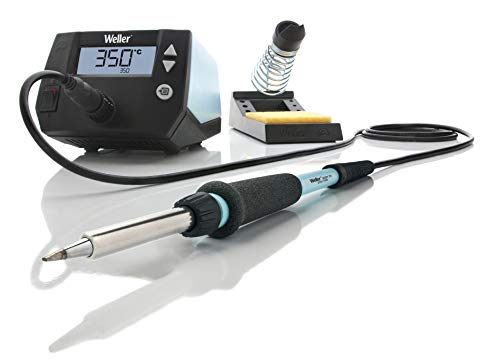
- Best overall: Weller WE 1010 (T0053298399) 70W/230V WE Digital Soldering Station — Its 70W output and temperature stability of +/- 2⁰c make it the strongest all-round choice
- Runner-up: Ersa i-CON PICO MK2 80W 150-450°C Soldering Station — The 80W heater and 150-450°C range make it a fast, flexible station for mixed repair jobs
- Third choice: Soldering Iron XS25 from Antex — It is a straightforward iron from a known name, but the lack of listed specs makes it hard
Retro console repair is unforgiving: too little heat and joints stay cold, too much and you lift pads, damage traces or cook delicate components. The right soldering iron gives you stable temperature, enough power to recover quickly on larger joints, and controls you can trust when working on old boards.
This guide looks at three real options for UK buyers, from a full-featured station to a simpler iron, and focuses on the specs that matter for console work: wattage, temperature range, stability and ease of tip changes. It is written for anyone repairing cartridges, controllers and main boards, whether you want a proper bench station or a straightforward hand tool.
| Product | Price | Key detail | |
|---|---|---|---|
| Weller WE 1010 (T0053298399) 70W/230V WE Digital Soldering Station 🥇 Top Pick |
£150-£250 | Easy to handle high performance 70W soldering iron… | Check price |
| Ersa i-CON PICO MK2 80W 150-450°C Soldering Station 🥈 Runner-Up |
£150-£250 | B | Check price |
| Soldering Iron XS25 from Antex 🥉 Third Place |
£30-£50 | — | Check price |
Specifications from Amazon product data. Price bands are a rough guide only — check the current price on Amazon before buying.
Our Top Picks
£150-£250
Weller WE 1010 (T0053298399) 70W/230V WE Digital Soldering Station
“Its 70W output and temperature stability of +/- 2⁰c make it the strongest all-round choice for repeatable console repair work.”
The Weller WE 1010 is the most capable station here for serious retro console work. The 70W iron has enough punch for ground planes and bigger joints, while the claimed temperature stability of +/- 2⁰c is exactly what you want when you are trying to avoid overheating old PCB pads. It also has an easy-to-read LCD screen, 3 push buttons, a front power switch and a heat-resistant silicon cable, so it is set up for regular bench use rather than occasional tinkering.
Its real advantage is control. The temperature lock, standby mode and AUTO setback are useful if you are moving between jobs or leaving the bench mid-repair, and the ability to change tips by hand without a tool is genuinely practical. The weakness is obvious: this is a proper station, so it is more than some hobbyists need, and it is harder to justify if you only open a console now and then. It is also not the lightest, simplest answer if you just want a basic iron for quick fixes.
- 70W output gives it enough headroom for stubborn solder joints
- Temperature stability of +/- 2⁰c helps protect old console boards
- Tool-free tip changes are convenient for multi-stage repairs
- Overkill for very occasional use
- More bench space and setup than a simple iron
Best for: Regular retro console repairers who want a dependable bench station with accurate temperature control
💬 Verdict: Pick this if you want the most controlled, confidence-inspiring station for careful console work.
£150-£250
Ersa i-CON PICO MK2 80W 150-450°C Soldering Station

“The 80W heater and 150-450°C range make it a fast, flexible station for mixed repair jobs on older electronics.”
The Ersa i-CON PICO MK2 is the most powerful option on paper, with 80W and a working range of 150-450°C. That extra output should help when you need quick heat recovery on thicker joints or more demanding repairs, and the fast start-up and reheating are genuinely useful if you do a lot of short sessions. The standby and calibration functions are also welcome, especially in a workshop where consistent results matter.
It is not quite as straightforward as the Weller. The listing mentions a basic operating concept, but also points to extra settings that depend on free PC software and an optional micro SD card, which adds complexity some buyers will never use. The feature list also looks uneven, with one stray line in the Amazon data, so there is less clarity here than you would like for a premium station. It is still a strong pick, but not as instantly reassuring as the Weller for a home bench.
- 80W output gives strong heating reserve
- 150-450°C range offers wide adjustment for different jobs
- Fast start-up and reheating suit repair work with frequent pauses
- Some advanced settings rely on PC software and an optional micro SD card
- Less immediately straightforward than the Weller
Best for: Experienced DIYers who want a powerful station and do not mind a slightly more involved setup
💬 Verdict: Choose this if power and speed matter more to you than the simplest possible interface.
£30-£50
Soldering Iron XS25 from Antex

“It is a straightforward iron from a known name, but the lack of listed specs makes it hard to judge against the stations above.”
The Soldering Iron XS25 from Antex is the plainest option in this guide, and that can be useful if you want something simple rather than a full station. The trouble is that the product data here is very thin: there are no listed wattage, temperature, or control details, so it is difficult to say how it will behave on old console boards beyond the fact that it is a basic iron.
Because retro console work often involves delicate pads and heat-sensitive components, that missing information matters. You cannot compare temperature stability or heat recovery, and you do not know whether it is better suited to fine joints or heavier soldering. Its main weakness is therefore not that it is bad, but that there is too little concrete data to recommend it over the better-specified stations above.
- Simple hand-tool format may suit beginners
- Brand is familiar to many UK hobbyists
- No wattage or temperature data in the listing
- Hard to judge performance on delicate console repairs
Best for: Buyers who want a very basic iron and are happy to compare it in person or via fuller product details elsewhere
💬 Verdict: Only pick this if you want a simple iron and do not need the control details offered by the stations above.
What to Look For — Buyer’s Guide
What to Look For
For retro console repairs, start with heat control. A station with a known wattage and stable temperature is safer on old boards than a vague all-purpose iron. In this guide, 70W and 80W models have enough reserve for stubborn joints, while a temperature stability figure such as +/- 2⁰c is a real advantage when you are trying to avoid lifted pads and damaged traces. Also look for practical details like quick reheating, standby modes and easy tip changes, because console work often means swapping between small joints and larger ground points.
It is also worth checking how much control you actually get at the bench. An easy-to-read display, simple buttons and a proper front switch make a station easier to live with if you repair often. If the listing only gives a bare model name and no wattage, temperature range or stability figure, treat that as a warning sign rather than a bargain.
How Much Should You Spend?
For occasional retro repairs, a basic iron may be enough if you already know exactly how you will use it, but the lack of specs makes it harder to buy with confidence. Once you move into regular console repair, a proper station is usually the better buy because it gives you repeatable heat and better protection for old components. In this group, the more fully specified stations sit in the same broad band, so the decision is less about saving money and more about how much control you want.
If you repair consoles regularly, spend for the station that gives you the clearest temperature control and the most useful day-to-day features. If you only do the odd recap or connector repair, you may not need the most advanced model, but you should still avoid choosing blind on the basis of brand alone.
Our Verdict
The top pick is the Weller WE 1010 (T0053298399) 70W/230V WE Digital Soldering Station for buyers who want the best mix of control, stability and practical features for regular retro console repair. The runner-up is the Ersa i-CON PICO MK2 80W 150-450°C Soldering Station, which suits people who want more power and a wider temperature range and do not mind a slightly more involved setup.
Frequently Asked Questions
What wattage is best for retro console soldering?
Around 70W to 80W is a sensible target here because it gives enough heat reserve for older boards and larger joints without being excessively aggressive.
Do I need a soldering station for console repairs?
Not always, but a station is usually better if you want stable temperature, quicker recovery and easier control on delicate PCB work.
Why does temperature stability matter?
Old console boards can be damaged by heat swings, so a stable iron helps you solder cleanly without overheating pads or nearby components.
Is 150-450°C useful for electronics repair?
Yes, because it gives you room to adjust for different jobs, though you still need to work carefully and avoid using more heat than necessary.
Can I use a basic soldering iron for retro consoles?
Yes, but only if it gives enough heat for the job and you are confident with hand-soldering; without listed wattage or temperature details, it is harder to judge suitability.