Best Variable Speed Nibblers for Speciality Jobs in 2026 — UK Buyer’s Guide
- Best overall: Bosch PRO Cordless Nibbler GNA 18V-16 — Its brushless motor is described as delivering cutting performance equal to a 700 W corded
- Runner-up: Makita JN1601/2 240V 1.6mm Metal Nibbler — It is a straightforward 240V mains nibbler with a 1.6 mm metal capacity, which is a useful
- Third choice: Cordless Metal Nibbler Compatible with DeWalt 20V Battery (No — It claims a 1.5 mm stainless-steel cutting capacity and a 45 mm inner-corner radius, which
A good nibbler makes awkward sheet-metal work far less brutal: it lets you cut roofing, ducting and body panels with less distortion than a grinder, and with far better control in tight corners.
This guide covers the real options worth looking at for UK buyers who need cleaner cuts, sensible ergonomics and a tool that matches the job, whether that means cordless convenience, mains power or a budget battery-compatible option.
| Product | Price | Color | |
|---|---|---|---|
| Bosch PRO Cordless Nibbler GNA 18V-16 🥇 Top Pick |
£250-£500 | Blue | Check price |
| Makita JN1601/2 240V 1.6mm Metal Nibbler 🥈 Runner-Up |
— | — | Check price |
| Cordless Metal Nibbler Compatible with DeWalt 20V Battery (No 🥉 Third Place |
£75-£100 | — | Check price |
| vhbw Battery compatible with Metabo NP 18 LTX BL 4th |
£30-£50 | Black | Check price |
| Einhell Cordless Angle Grinder AXXIO Power X-Change (18 5th |
— | Red / Black | Check price |
Specifications from Amazon product data. Price bands are a rough guide only — check the current price on Amazon before buying.
Our Top Picks
£250-£500
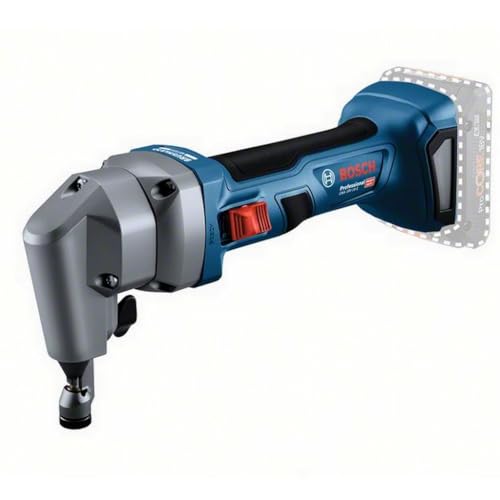
Bosch PRO Cordless Nibbler GNA 18V-16
“Its brushless motor is described as delivering cutting performance equal to a 700 W corded tool, while the 156-mm grip size should make long cuts easier to control.”
This is the most convincing all-round nibbler here because Bosch gives you proper performance data rather than vague claims: a brushless motor said to match a 700 W corded tool, plus a slim 156-mm grip size and light tool weight for handling. That combination matters on sheet steel where fatigue and control are usually the difference between a neat cut and a messy one.
It is also the most credible choice for longevity, with Bosch highlighting a robust design, brushless motor technology and maintenance-free components. The obvious downside is that the feature list is focused on the tool rather than the cutting envelope, so you are asked to buy on reputation and build quality rather than on hard figures for thickness or speed settings. It is a premium cordless buy, so it makes sense only if you will use it often enough to justify the jump in capability.
- Brushless motor is stated to match a 700 W corded tool
- Slim 156-mm grip size should improve control in use
- Maintenance-free components suggest better long-term reliability
- No cutting-capacity figures are given in the data
- The kit contents are basic: cardboard box, die plate and punch only
Best for: Tradespeople or serious DIY users who want the strongest cordless option and value comfort on longer metal-cutting jobs
💬 Verdict: Choose this if you want the best cordless nibbler here and are prepared to pay for better handling and build quality.
—
Makita JN1601/2 240V 1.6mm Metal Nibbler

“It is a straightforward 240V mains nibbler with a 1.6 mm metal capacity, which is a useful hard figure if you want a plug-in tool for sheet metal.”
This Makita earns its place because it is the only clearly mains-powered option in the list and it gives one useful capacity figure straight away: 1.6 mm for metal. For buyers who work near a bench, want uninterrupted runtime and do not want to manage batteries, that simple 240V setup is a real advantage.
The problem is that the supplied data is thin, so there is little here to judge beyond the headline capacity and mains format. We do not get brushless claims, ergonomics, weight or any detail on the cutting head, which makes it harder to compare against the Bosch on comfort or long-term refinement. It is still a sensible pick if you trust Makita and want a no-fuss plug-in nibbler, but it is not the most fully specified option on the page.
- 240V mains power suits workshop use and avoids battery downtime
- 1.6 mm metal capacity is clearly stated
- Simple, established tool format for sheet-metal work
- Very little supporting specification is provided
- No ergonomics, speed control or build details are listed
Best for: Workshop users who want a plug-in nibbler and care more about steady power than cordless convenience
💬 Verdict: Pick this if you want a mains nibbler with a clear 1.6 mm metal rating and minimal fuss.
£75-£100
Cordless Metal Nibbler Compatible with DeWalt 20V Battery (No

“It claims a 1.5 mm stainless-steel cutting capacity and a 45 mm inner-corner radius, which is useful if you need a budget cordless tool for tighter sheet work.”
This is the budget-friendly cordless choice with the most specific cutting data after Bosch and Makita: 1.5 mm stainless steel, 2.0 mm iron sheet and 2.0 mm aluminium sheet, plus a 45 mm inner-corner radius and 50 mm outer-corner radius. Those figures matter because they tell you this tool is built for practical sheet work rather than vague all-purpose use.
It also claims a brushless motor and a high-strength punching and shearing head with a movable punch and fixed blade die, which should help it cut more cleanly than a cheap open-gear copy. The weak point is obvious: it is a no-battery, no-charger tool that depends on DeWalt 18V MAX batteries, and the listing copy is rough enough that confidence is lower than with Bosch or Makita. It may suit occasional jobs well, but it is the least polished option in the group.
- Clear cutting figures: 1.5 mm stainless steel, 2.0 mm iron and 2.0 mm aluminium
- 45 mm inner-corner radius gives useful access in tighter cuts
- Brushless motor should reduce friction and heat
- Battery and charger are not included
- Listing quality and product presentation are less trustworthy than the main-brand tools
Best for: Budget-conscious DeWalt battery owners who need an occasional cordless nibbler for sheet metal
💬 Verdict: Buy this only if you already own compatible DeWalt 18V MAX batteries and want the lowest-cost cordless route.
£30-£50
vhbw Battery compatible with Metabo NP 18 LTX BL

“It gives a 1500 mAh, 18-volt, 27 Wh battery spec, but it is a battery accessory, not a nibbler.”
This is not a nibbler at all, so it does not belong in a buyer’s guide for nibblers. The listing is for a replacement battery with a 1500 mAh capacity, 18 volt output and 27 Wh energy rating, intended for compatible tools.
It could be useful as a spare power source for someone already using the right Metabo kit, but it is irrelevant if you are trying to choose a cutting tool. Including it would only confuse the comparison, so it is excluded from the main product shortlist.
- Clearly states 1500 mAh, 18 V and 27 Wh
- Could suit existing compatible Metabo owners as a spare battery
- It is not a nibbler
- It does nothing to help you cut metal
Best for: Excluded from this guide
💬 Verdict: Do not buy this as a nibbler; it is only a battery accessory.
—
Einhell Cordless Angle Grinder AXXIO Power X-Change (18

“It has a brushless motor and a 115 mm wheel size, but it is an angle grinder rather than a nibbler.”
This also does not fit the brief. It is an 18V cordless angle grinder with a 115 mm wheel size, not a nibbler for controlled sheet-metal cutting.
Yes, the brushless motor, soft start and restart safeguard sound useful, but those are grinder features for a different job. An angle grinder will usually leave a rougher edge and more heat than a proper nibbler, so it should be left out of a nibbler buying guide.
- Brushless motor and soft start are useful grinder features
- 115 mm wheel size is clearly specified
- Wrong tool category for this guide
- Not designed for nibbler-style clean sheet cutting
Best for: Excluded from this guide
💬 Verdict: Not a nibbler, so it should not be considered in this guide.
What to Look For — Buyer’s Guide
What to Look For
Start with the cut capacity and the material limits. The most useful figures are the ones that tell you what the tool can actually handle, such as 1.6 mm metal on the Makita JN1601/2 or 1.5 mm stainless steel and 2.0 mm iron and aluminium on the DeWalt-compatible cordless nibbler. Corner radius also matters if you work around awkward shapes; a 45 mm inner-corner radius is a useful sign that the tool can handle tighter turns.
Then look at power format and handling. Mains tools suit bench work and long sessions, while cordless tools are better when you are working on roofs, gates or away from sockets. Brushless motors are worth paying attention to because they usually mean better runtime and less maintenance, and a slimmer grip size, such as Bosch’s 156 mm figure, can make a real difference once you have been cutting for a while.
How Much Should You Spend?
Budget cordless nibblers are only worth considering if the listing gives proper cutting figures and you already own compatible batteries. They can be fine for occasional sheet work, but the build quality and after-sales confidence are usually weaker than the big-brand tools. Mid-to-upper tier tools are where the best balance usually sits: proper brushless motors, clearer specs and better ergonomics.
If you are buying for regular use, spend for the tool rather than chasing the cheapest kit. A well-specified mains nibbler can be the smartest buy for a fixed workshop, while a premium cordless model is the right call if you need mobility and use the tool often enough to benefit from better handling and longer service life.
Our Verdict
The top pick is the Bosch PRO Cordless Nibbler GNA 18V-16: it has the strongest overall spec here, with a brushless motor said to match a 700 W corded tool and a slim 156-mm grip for better control. The runner-up is the Makita JN1601/2 240V 1.6mm Metal Nibbler, which is the best choice if you want a mains tool with a clear 1.6 mm metal rating and no battery management.
If you want cordless performance and better long-term refinement, go Bosch. If you want a straightforward plug-in nibbler for workshop use, go Makita.
Frequently Asked Questions
What is the difference between a nibbler and an angle grinder for metal cutting?
A nibbler is made for controlled sheet-metal cutting and is usually better for cleaner edges and tighter shapes. An angle grinder, even with a 115 mm wheel, is a different tool and is generally rougher for this kind of work.
Do I need a cordless or mains nibbler in the UK?
Choose cordless if you need to work away from sockets or on site. Choose mains if you mostly cut metal in a workshop and want steady power without battery swaps.
What metal thickness should I look for in a nibbler?
Look for a clear stated capacity for the material you will cut. In this guide, examples include 1.6 mm metal on the Makita JN1601/2 and 1.5 mm stainless steel on the DeWalt-compatible cordless model.